
30.05.2026 - 15.09.2026
“The memory of each of those objects slowly seeps out of our minds and spills over, like drops of water, until it falls into the deep well of oblivion.”
“Will I feel afraid when that happens?” I asked anxiously.
“Not in the slightest. It happens almost without you noticing. You will feel neither pain nor fatigue. One ordinary morning, upon waking, something will have vanished from your life, leaving everything else intact, and you will only perceive a slight misalignment from the day before.”
— Hisoyaka na Kesshō [The Memory Police], Yōko Ogawa
Things stabilize human life. They function as anchors to our tangible reality and allow us to see the world. Non-things, on the other hand, destroy it. This is what philosopher Byung-Chul Han argues when he explains that today the world is being emptied of physical objects and filled instead with digital information, with disembodied voices. As hunters of information, we increasingly ignore small, discreet, everyday things: those that stimulate our memory and root it in something physical.
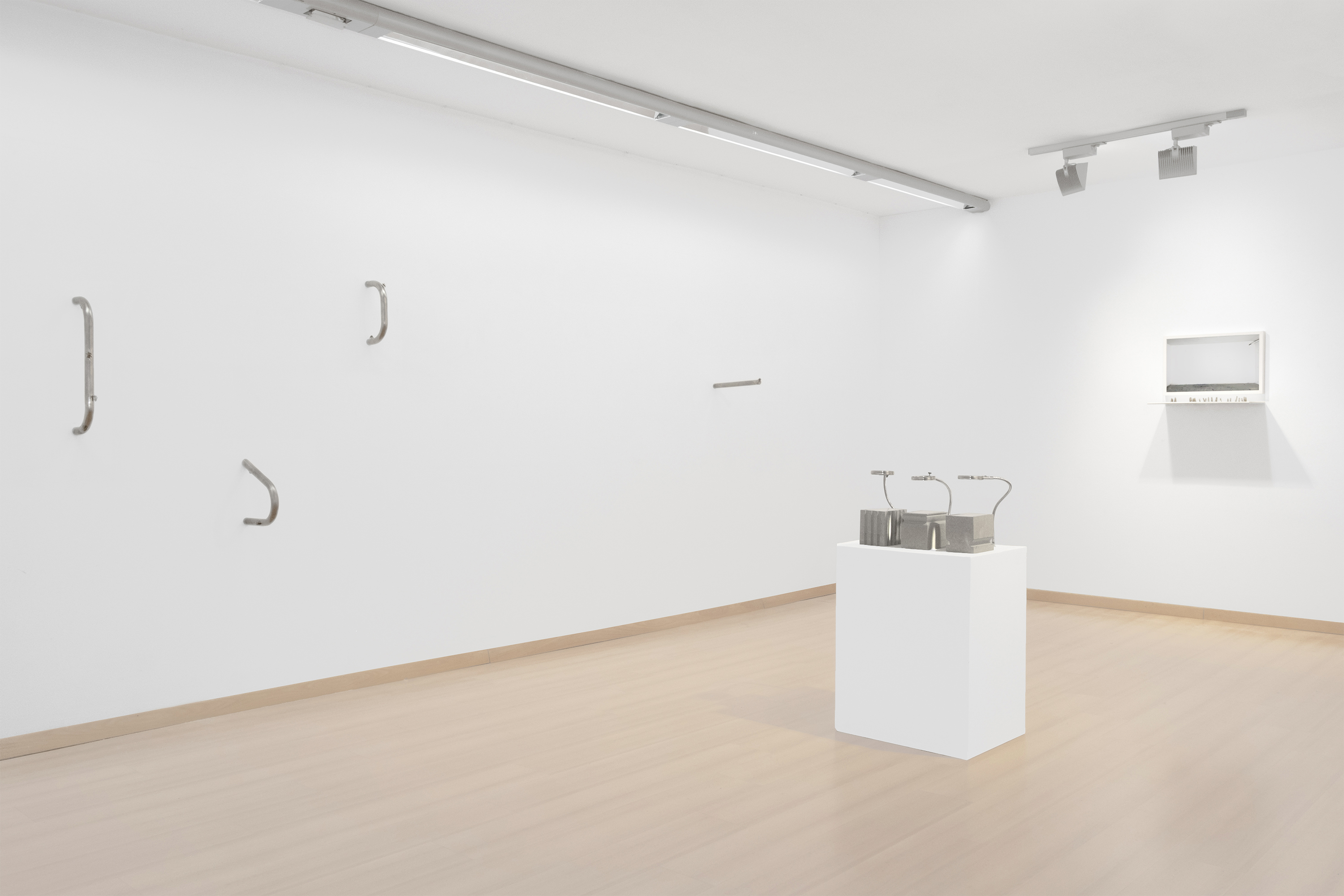
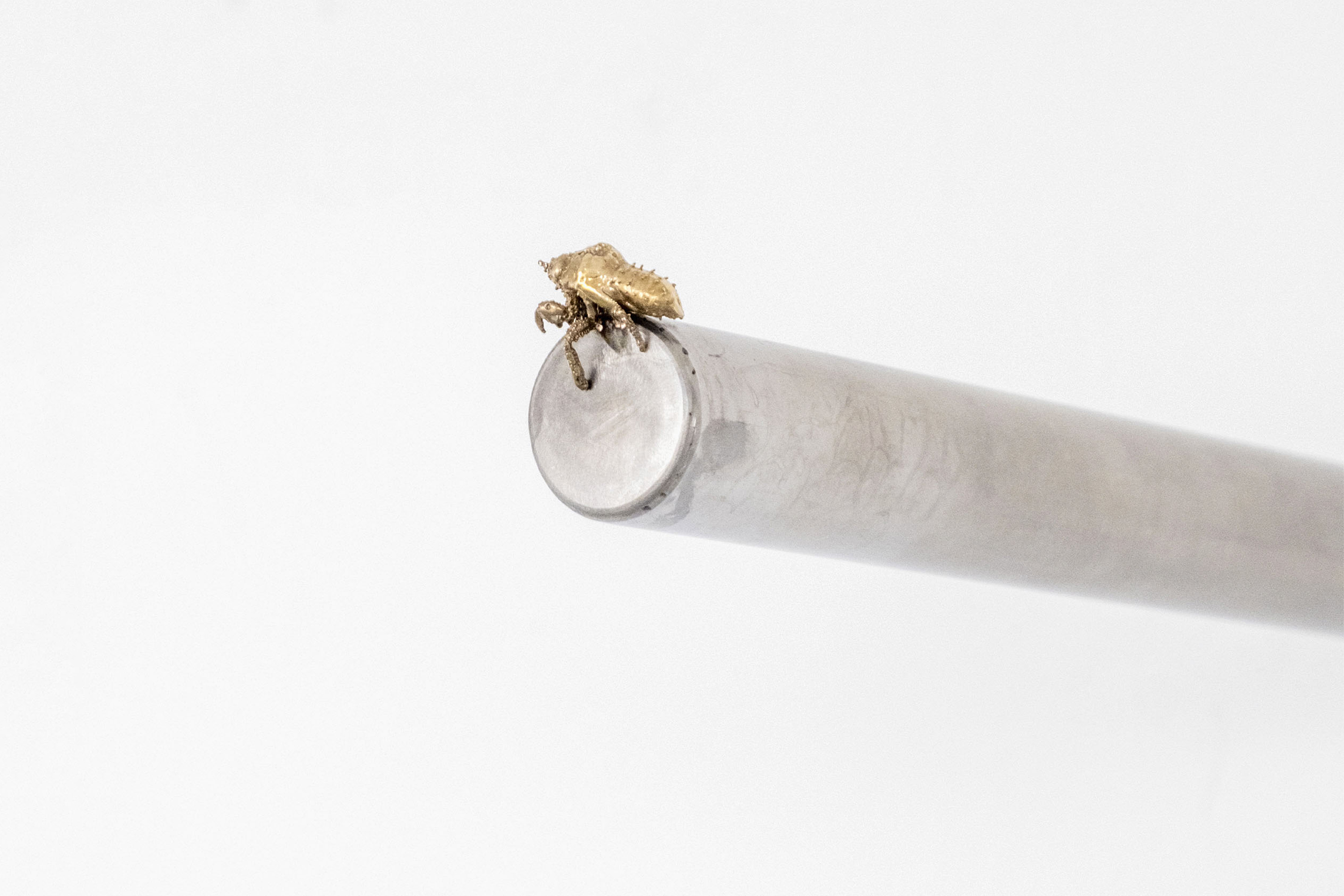
In Espai Contaminat, Iacopo Pinelli transforms small traces from his surroundings into sculptures and installations that explore the relationship between nature, memory, and space. An olive pit, a lizard’s tail, spider droppings, the dust from an empty hole, or the old exuvia of a cicada. These elements, modified and transformed into artworks, reveal how natural processes silently infiltrate architecture and everyday life, making visible small things that often go unnoticed and that we only perceive when our minds begin to wander.
Without falling into an orthodox nostalgia for the past, Pinelli’s works —as well as Ogawa’s introductory passage— reclaim the importance of objects today and the ways in which they, by infiltrating and altering our living spaces, act as devices of permanence and persistence for memory.
Text by Ricard Casals Coiduras
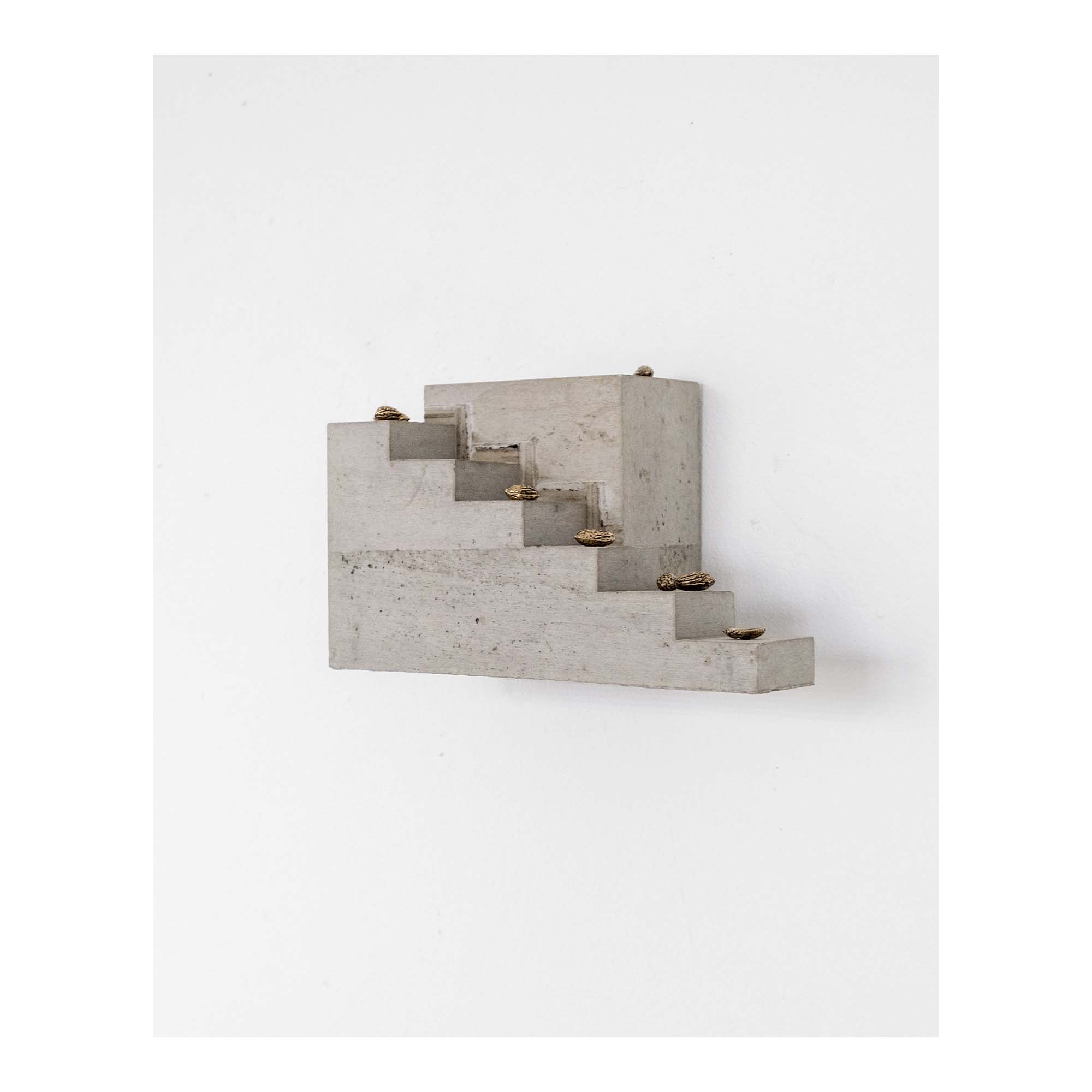
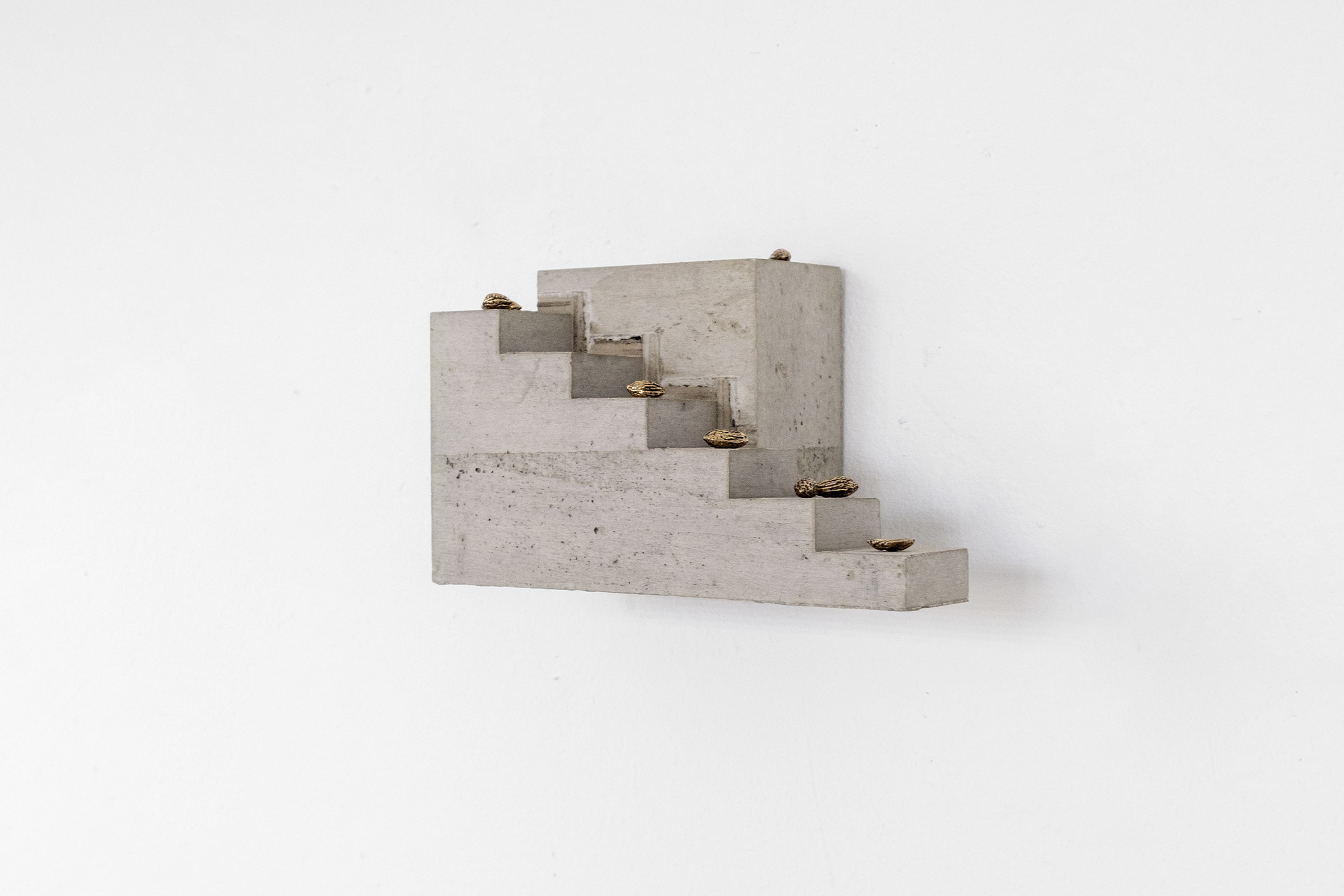
(Where do we come from)
Cement, iron, bronze pieces
25 x 15 x 15 cm – 2026
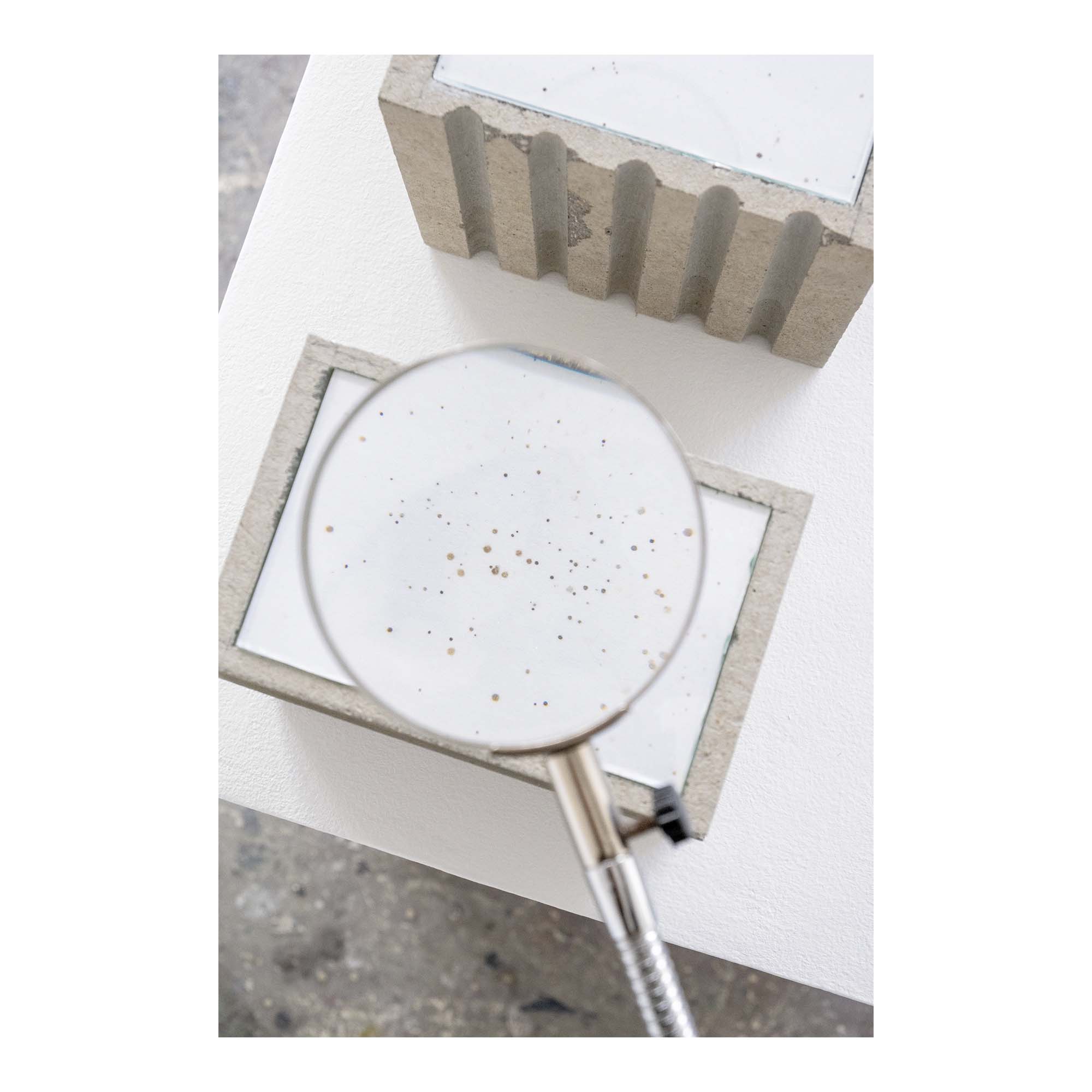
(Spatial alterations)
Cement, paper, iron, wood, magnifying glasses,
organic traces
Variable dimensions – 2026
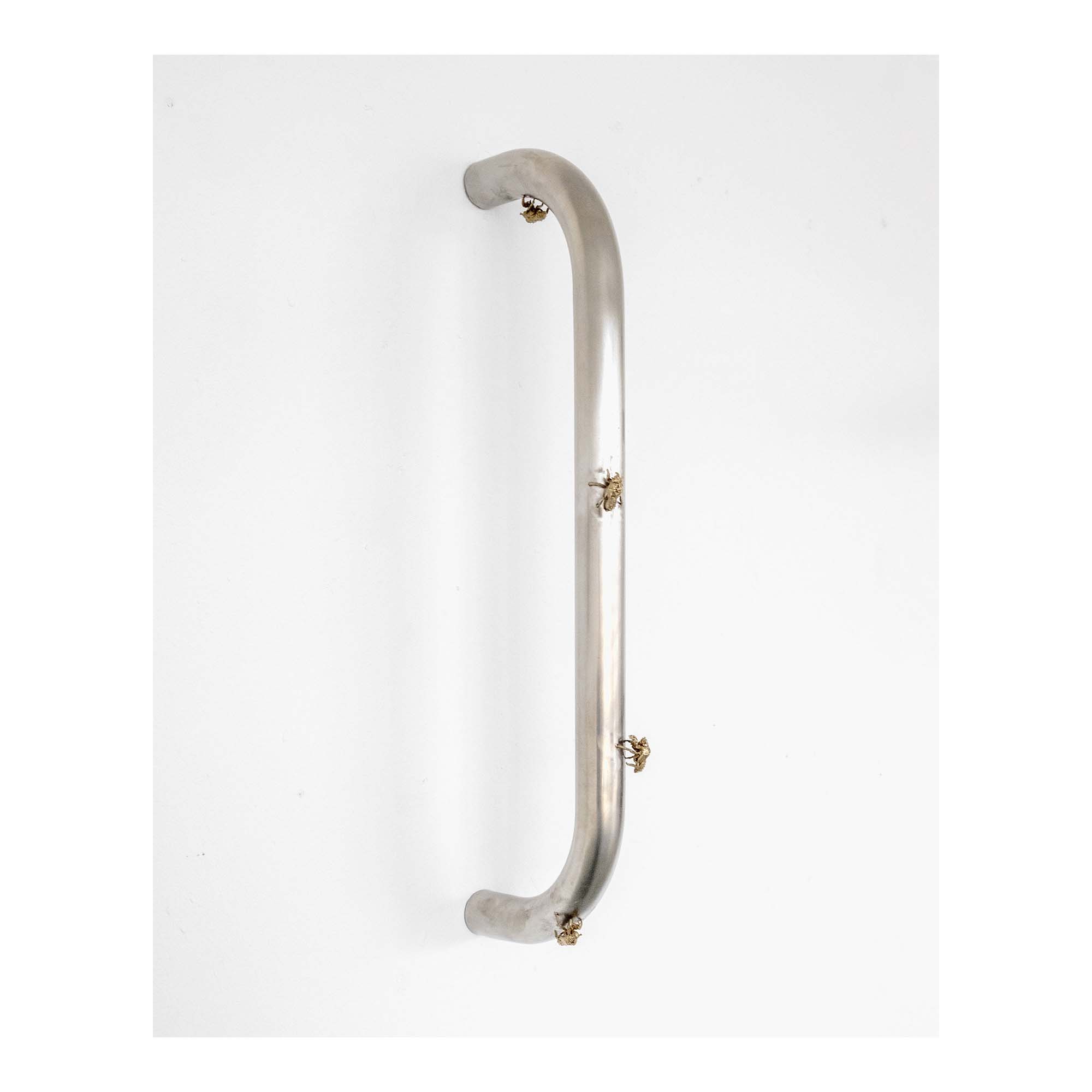
(Molting point)
Stainless steel, bronze pieces made using the lost-wax technique
Variable dimensions – 2026
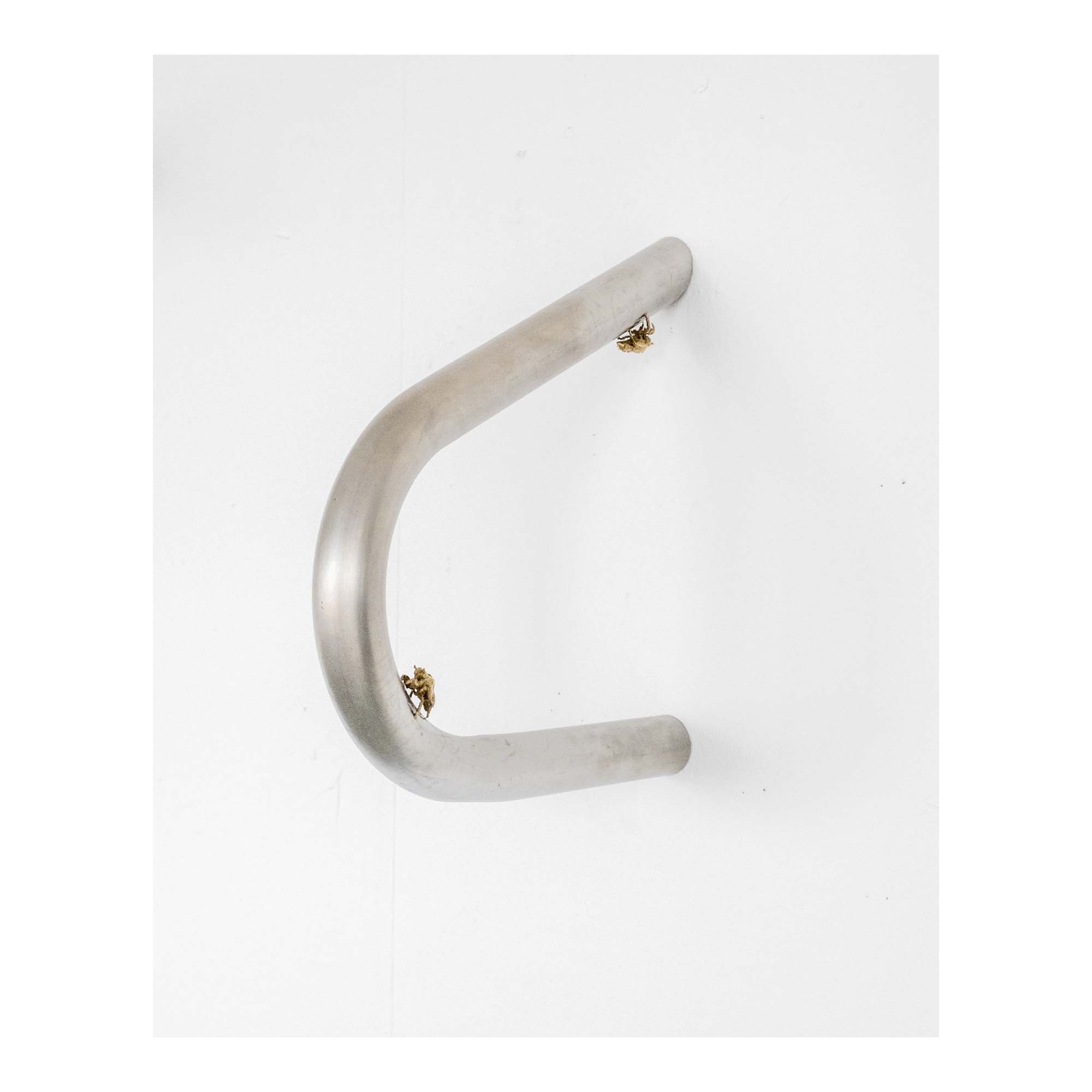
(Molting point)
Stainless steel, bronze pieces made using the lost-wax technique
Variable dimensions – 2026
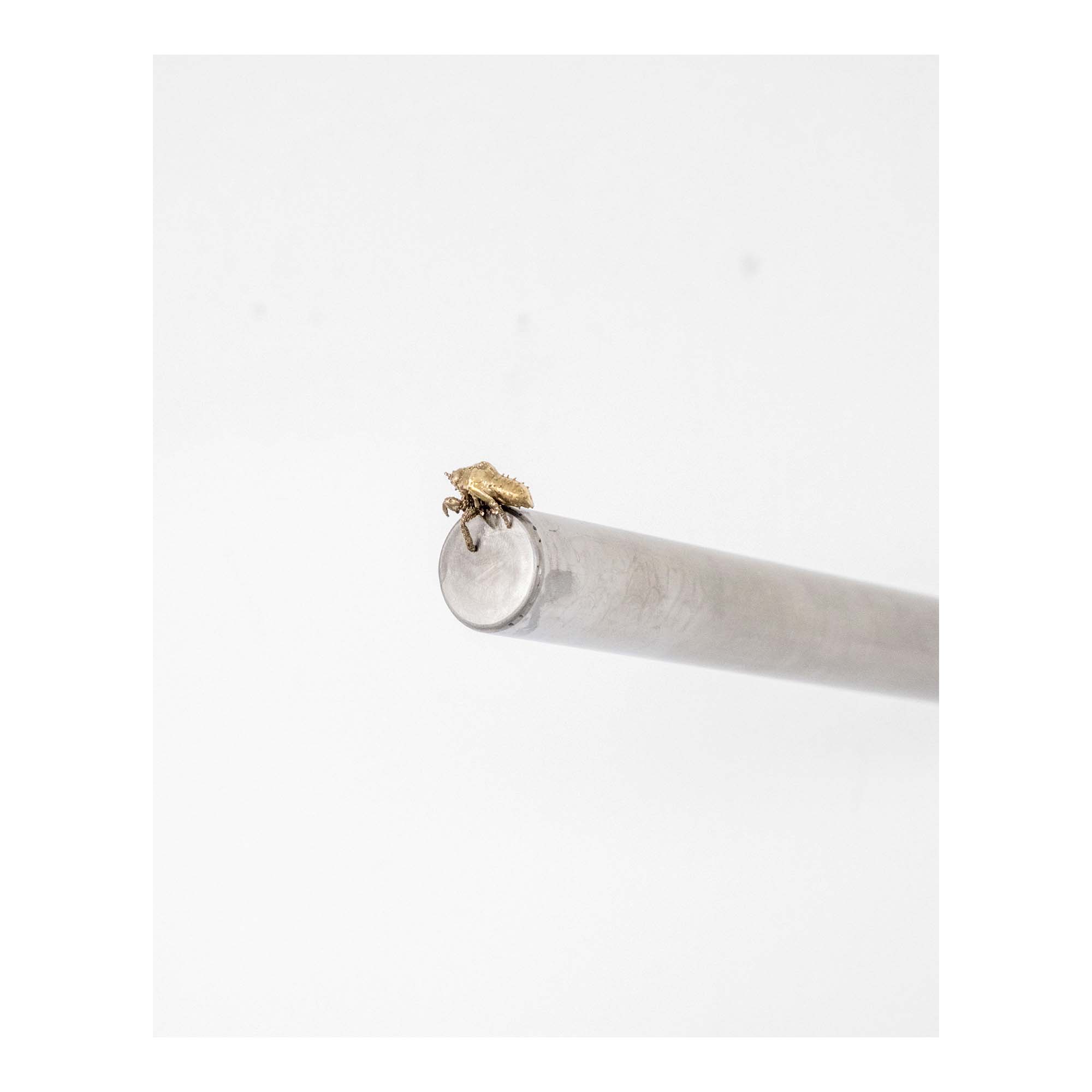
(Molting point)
Stainless steel, bronze pieces made using the lost-wax technique
Variable dimensions – 2026
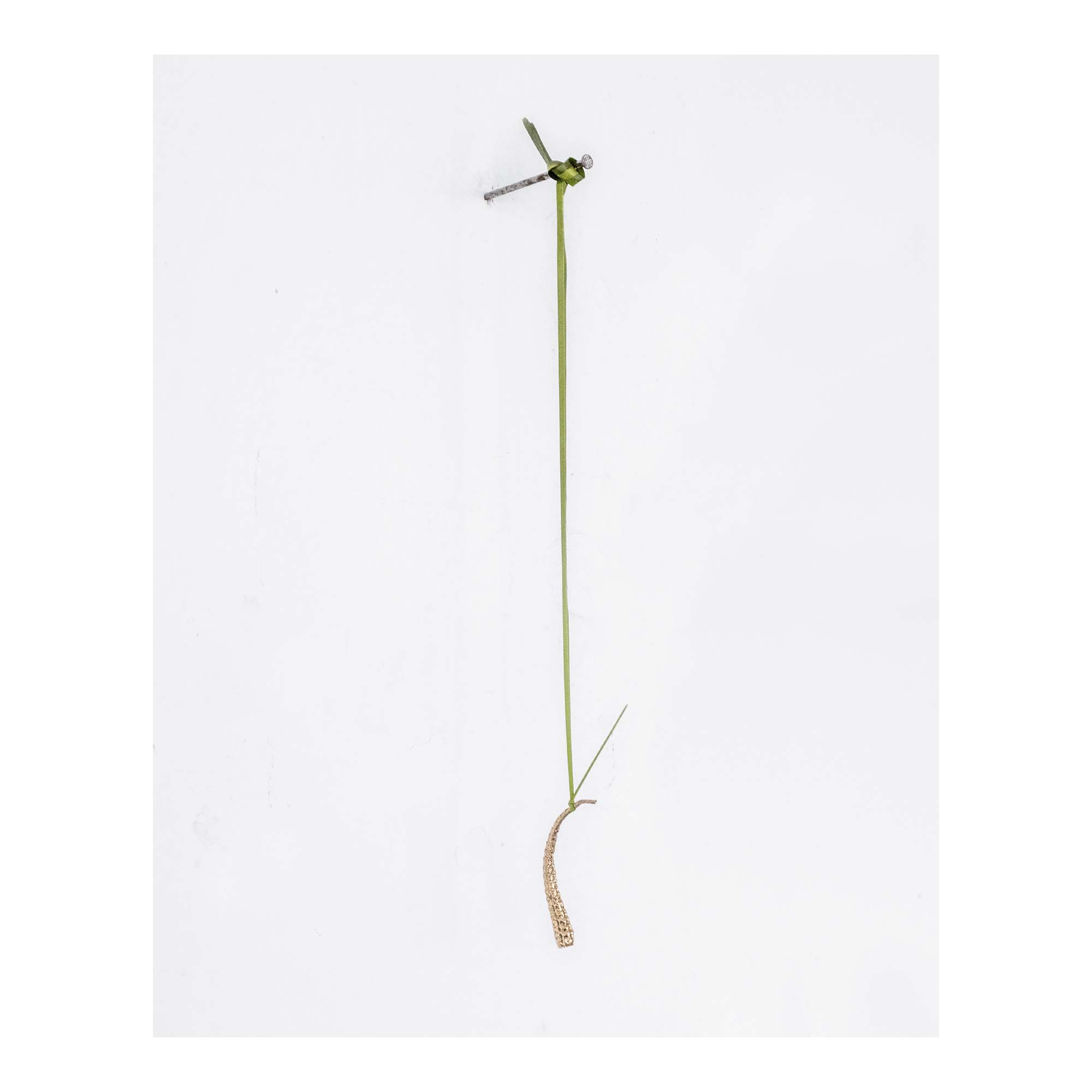
(Let me go)
Bronze piece, iron, plastic
32 cm – 2026
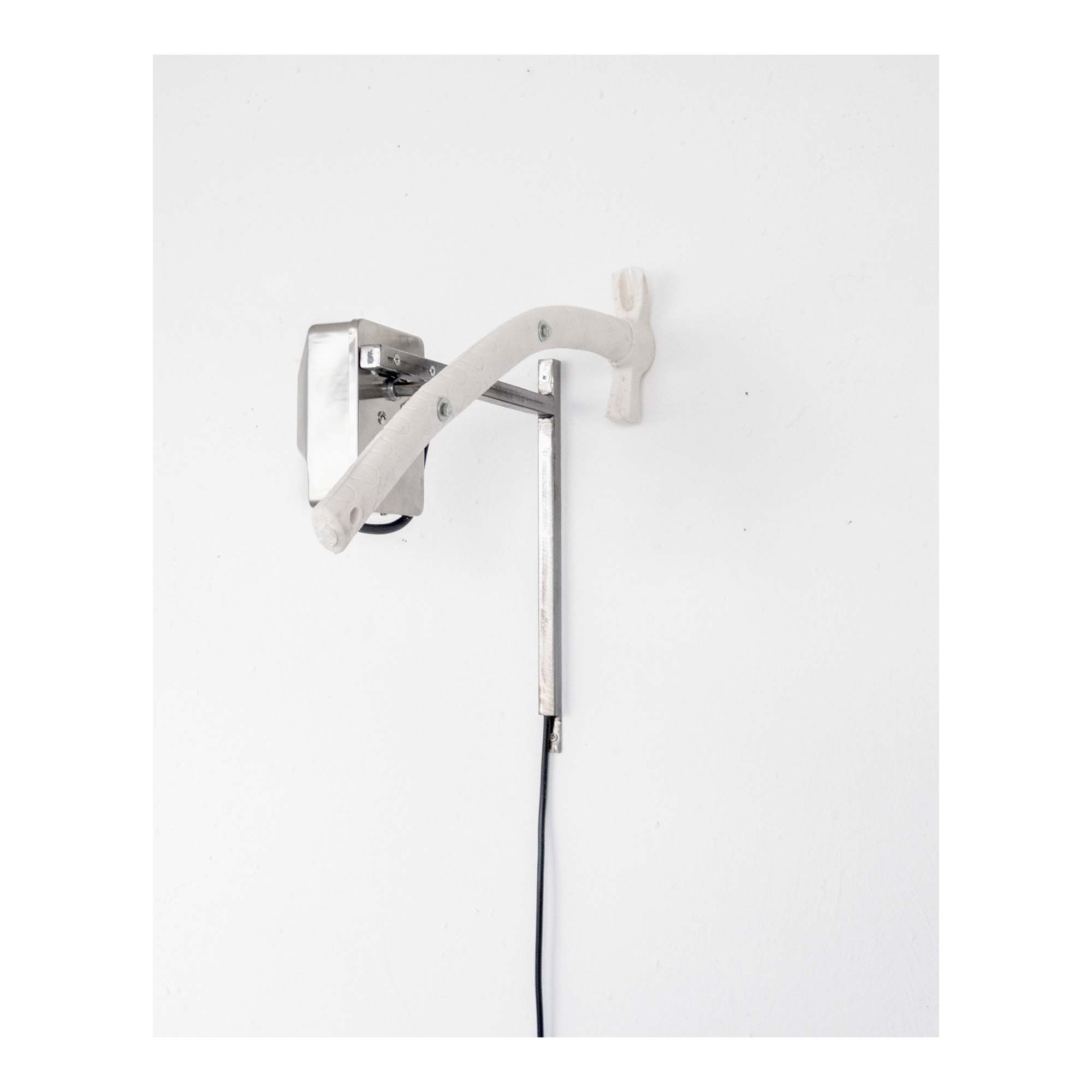
(Dysfunctional bodies)
Iron, motor, electric cable,
polyurethane rubber
Variable dimensions – 2026
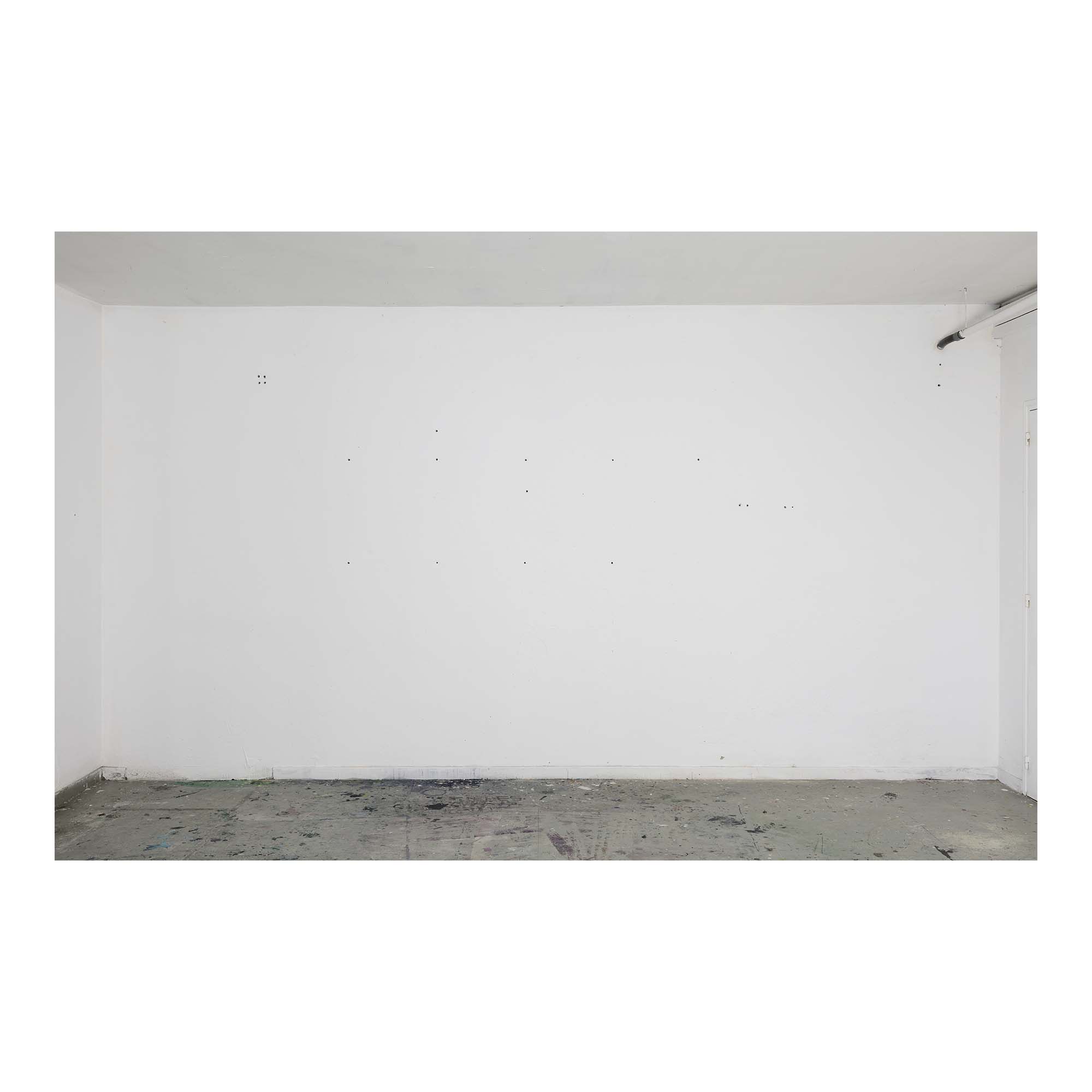
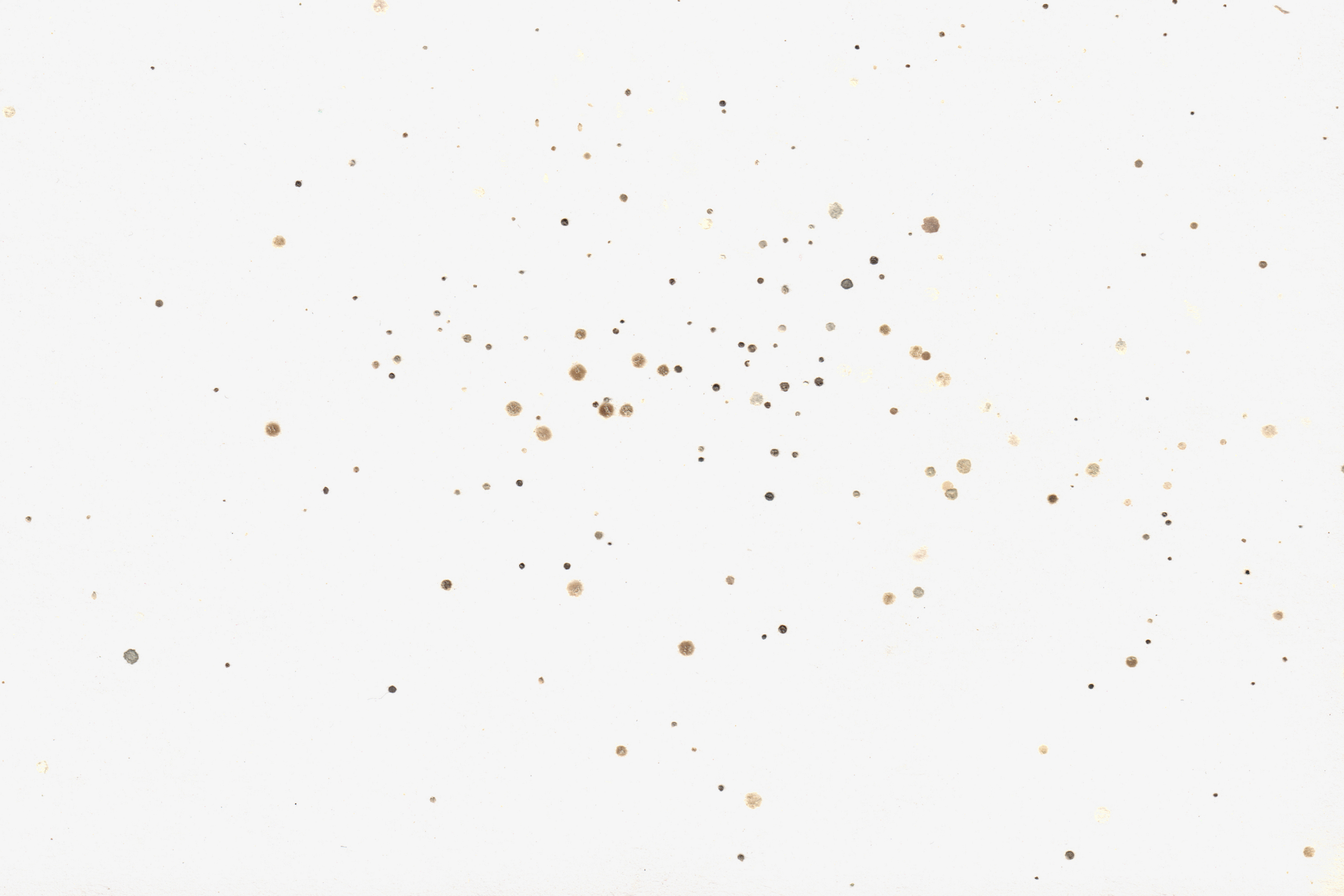
(Ask the dust)
Photography, wood, bronze pieces
Ed.1/1
60 x 50 cm – 2026